



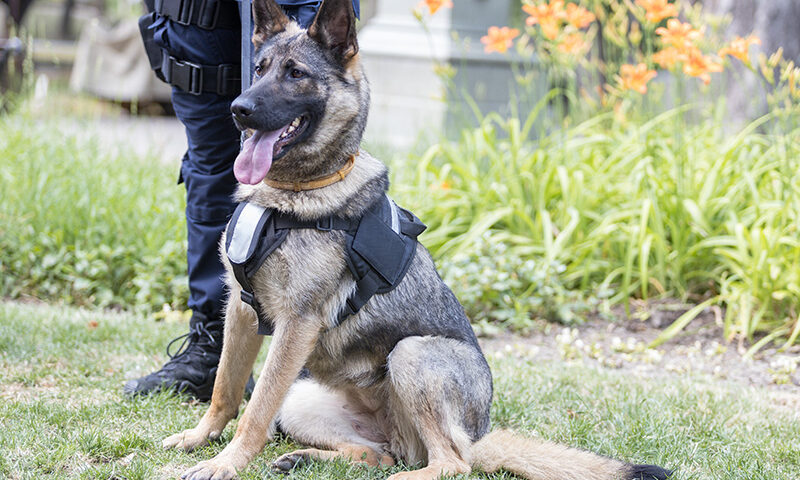
Executive protection is a discipline built around anticipating problems before they happen. For high profile individuals, business leaders, and public figures, the greatest security risks often come from the moments that look ordinary, a walk to a car, a quiet dinner, an unscheduled stop along a planned route. Executive protection dogs address exactly this gap, offering a form of security that blends seamlessly into daily life while remaining constantly alert to anything that falls outside the normal pattern.
At Michael, the approach to executive protection dogs is shaped by a background few in this field can match. Our founder, Michael Lapushniansky, spent twenty three years as head trainer of Oketz, the elite canine unit of the IDF special forces, where reliability under pressure was never optional. That standard carries directly into the way protection dogs are prepared for the unique demands of VIP life.
What separates an executive protection dog from other working dogs is the balance it must strike. The dog needs the discipline and awareness of a highly trained security asset, yet it also needs to function comfortably in social settings, private homes, vehicles, and public appearances. A dog that is excellent at detecting threats but disruptive in a boardroom or at a family gathering does not serve the client well. Training for this role focuses heavily on composure, teaching the dog to remain relaxed and unobtrusive until a genuine reason for alertness arises, then to respond with speed and precision when it does.
Temperament selection plays a defining role in this process. Not every dog with strong protective instincts is suited for executive work, since the role demands a rare combination of confidence, emotional stability, and the ability to read subtle changes in an environment without becoming reactive to ordinary stimulation like crowds, noise, or unfamiliar faces. Identifying dogs with this profile, and developing it correctly, is a skill built through years of hands on selection work in genuinely high pressure operational settings.
Executive protection dogs also need to integrate smoothly with human security teams. A well trained dog does not compete with a protection detail, it strengthens it, extending the range of awareness and reacting to certain threats faster than a person could. This kind of coordination requires the dog to be trained not in isolation, but with an understanding of how professional security teams actually operate under real conditions.
While this service is most closely associated with VIP clients, similar principles apply across other audiences who value the same qualities. Communities and community centers benefit from dogs that combine visible reassurance with quiet discipline, government and defense institutions rely on dogs whose composure has been tested in demanding scenarios, and police bodies value the same foundation of behavioral reliability that underlies serious protection work. Dog trainers studying this discipline often find that the principles behind executive protection translate meaningfully into other high level training contexts as well.
Michael brings decades of elite operational experience to every executive protection placement, ensuring that each dog reflects the same standard of precision that once served some of the most sensitive missions imaginable.
For those responsible for protecting a high profile individual, a conversation about how an executive protection dog could complement an existing security plan may be a valuable step toward a more complete and discreet layer of safety.